Football: A France x US Story
The FIFA World Cup 2026 placed the sporting relationship between the United States, one of the event’s co-hosts, and France firmly in the spotlight.
The FIFA World Cup 2026 placed the sporting relationship between the United States, one of the event’s co-hosts, and France firmly in the spotlight. But the ties are more than 100-years strong.
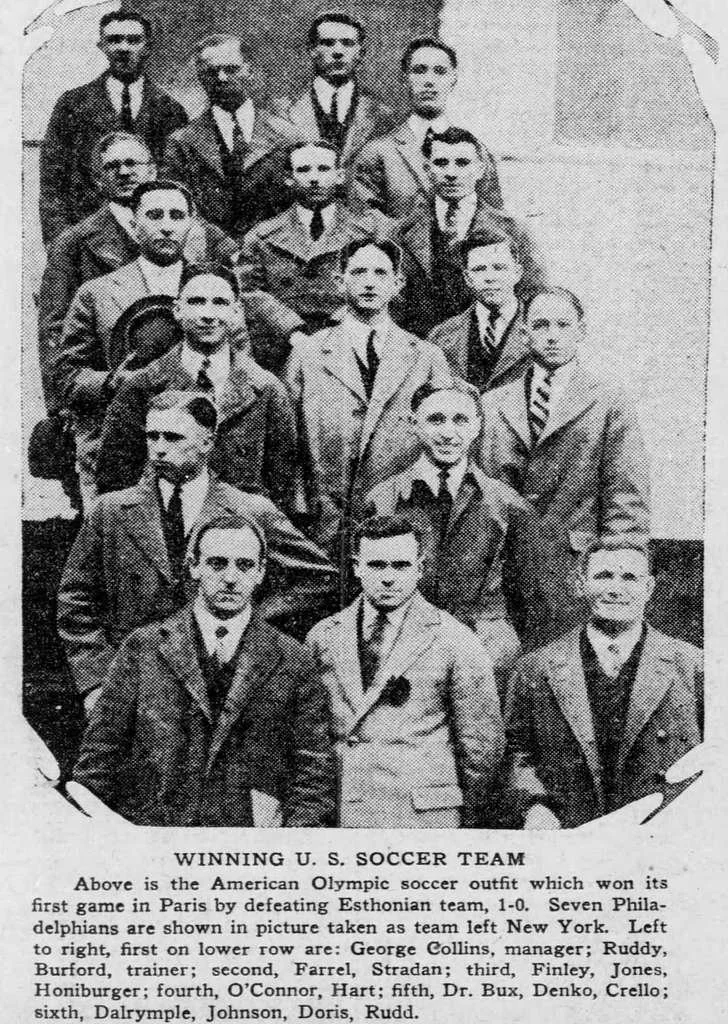
The 1924 U.S. Olympic Football Team
The Franco-American football story includes several chapters over the last century. Some of the earliest U.S. footballers to play in France were the young men who competed for the United States at the 1924 Paris Olympics. Haiti-born Joe Gaetjens, who played for the U.S. men’s national team at FIFA World Cup 1950 (where he scored “the most famous goal in American soccer history”) played with top flight clubs Racing Club de Paris and Olympique Alès in the early 1950s. And more American men began to play in Ligue 1 after 2010.
The transatlantic flow westward within the men’s game looks a little different. First, it was French students who played during their U.S. university years, such as former New York Red Bulls Soccer Club General Manager Jerome de Bontin, who played for Amherst College’s varsity soccer team while studying economics in the late 1970s and early 1980s. Today, there are more than 400 young Frenchmen who are student-athletes within the NCAA system.
Since the 1996 establishment of Major League Soccer, it’s also been French professionals who arrive on American shores to ply their craft. Some of the biggest names in the global game came to MLS toward the end of their playing days, including Youri Djorkaeff, Thierry Henry, Hugo Lloris, Olivier Giroud, and Antoine Griezmann (who joined Orlando City in 2026). And there’s a bit of French influence within MLS itself, such as Frédéric Lipka whose portfolio is particularly focused around MLS youth development.
But it’s within women’s football where the Franco-American football ties run deepest in terms of how they have nourished each other.
Frenchwomen have played starring roles within their U.S. university teams, thanks to Title IX’s sports provisions. For example, former French international and Boston College Hall of Famer Laura Georges seized on her U.S. experience in the early 2000s to develop her off-pitch capacities and leadership, all of which she brought home as she helped elevate the game.
They’ve also played key roles within U.S. women’s professional soccer. Legend and former Les Bleus captain Marinette Pichon led the way, as the Women’s United Soccer Association (WUSA) Most Valuable Player of 2002 during her time with the Philadelphia Charge. Camille Abilly and Sonia Ponpastor both played in the short-lived Women’s Professional Soccer League (WPS) then later etched their marks within the sport’s coaching ranks.
And they keep making waves within the National Women’s Soccer League (NWSL) era. Since the league’s first season in 2013, several of France’s best talents have experienced the United States through “soccer,” including Amandine Henry and France’s greatest goalscorer Éugenie Le Sommer. More recently, Delphine Cascarino and Kenza Dali have taken over as part of the league’s “New French Wave.”
The flow goes the other way, too. In the 2000s, top French clubs OL Féminin (now OL Lyonnes) and Paris-Saint-Germain Féminin were fertile terrain for US Women’s National Team (USWNT) talent like Megan Rapinoe, Alex Morgan, and Lindsey Horan, a place where they could continue to develop and refine their game. Other American players, such as Arianna Criscione, converted their French football experience into building the business of women’s sports on- and off-pitch.
This is in part a reflection of how France was an incubator of the pro game, particularly thanks to the early investments of Louis Nicollin (Montpellier) and Jean-Michel Aulas (Lyon). As the NWSL gained greater financial investment, more French (and other foreign) players headed to North America for their careers.
Then there’s the way that U.S. businesswoman Michele Kang is breaking new ground. Owner of OL Lyonnes, as well as the Washington Spirit (NWSL) and London City Lionesses (WSL), Kang is also the chairwoman and president of Olympique Lyonnais (OL) as well as, since June 2026, its majority owner.
The Franco-American football relationship was deepened by FIFA World Cup 2019 and Paris 2024. FIFA World Cup 2026 will add yet another chapter to this story.
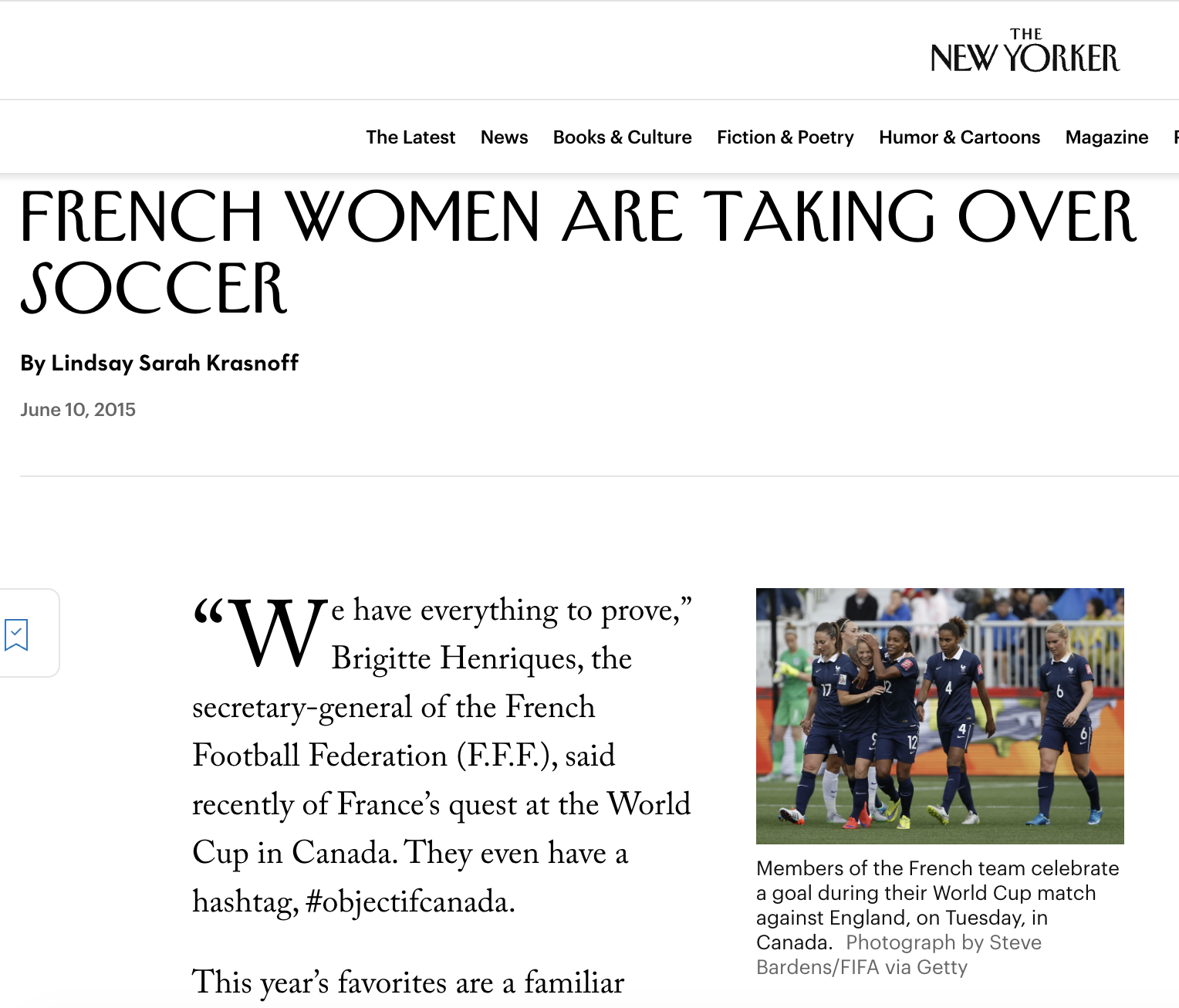
For more on these historic influences, see “Football: une success story américaine” (France-Amérique, 2019) and “French Women are Taking Over Soccer” (The New Yorker, 2015).
Visit the FranceAndUS Voices of Soccer to learn more about the individuals involved in this transatlantic story.

Boston’s Role in the FranceAndUS Story
The sporting ties between France and the United States have fostered closer relationships and understandings, strengthening and complimenting each other since 1893.
What makes this story special is the multiplier effect. Sports are ways for everyday citizens to engage with and better understand each other. In the process, they learn something about their craft and about themselves, passing this knowledge on to others. These interactions pay dividends in strengthening the abilities of each country’s sporting sectors and athletes—and the Bay State has played an important role.
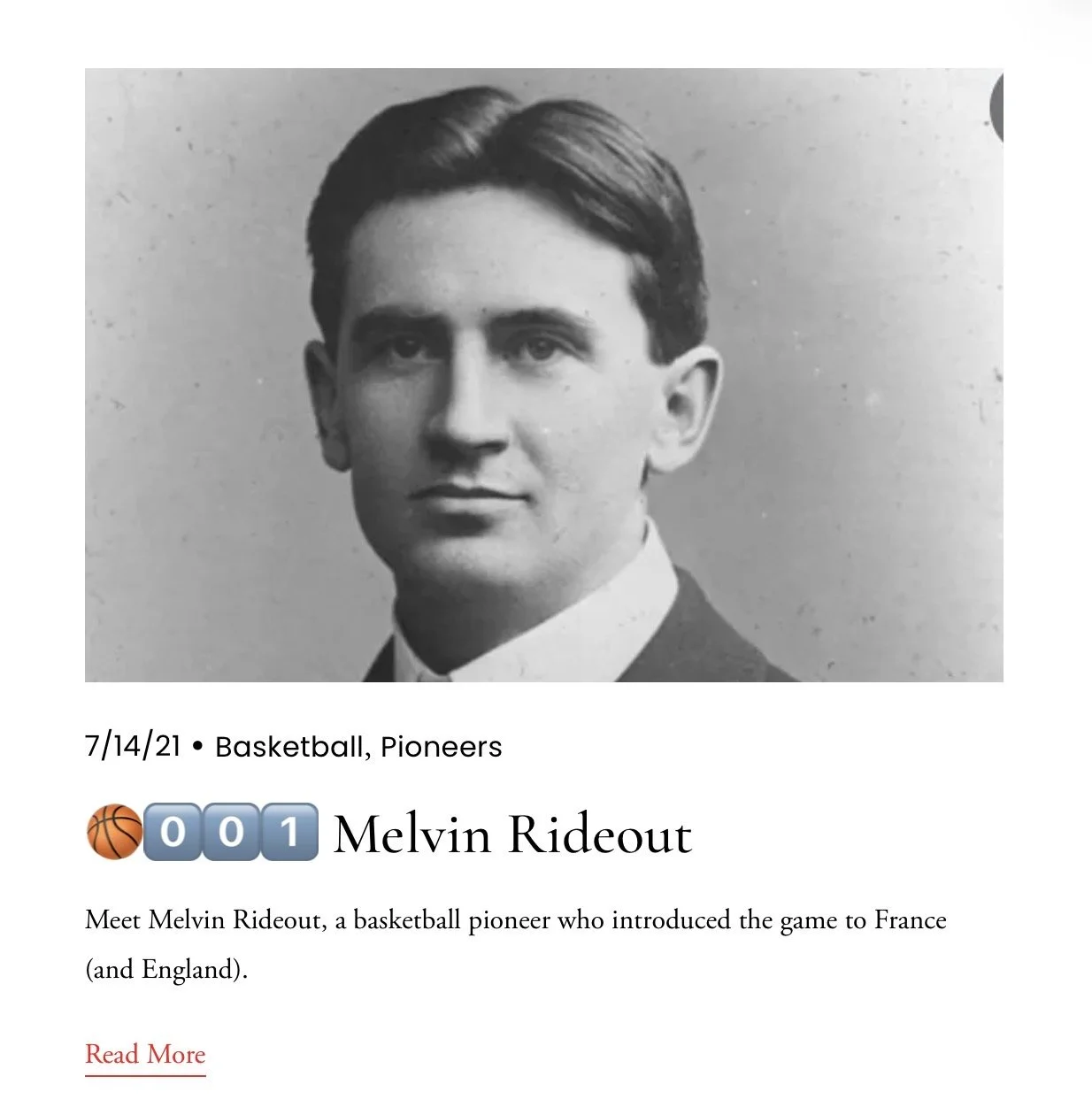
Little did 22-year-old Melvin Rideout know that his first job following college graduation in Springfield, Massachusetts in 1893, sowed the seeds of French and American sporting relations that have endured to this day.
Rideout arrived in Paris that summer to serve as the YMCA Paris Association’s first-ever physical education director. Their newly minted building, located at 14 rue de Trévise, contained an exact replica of the gymnasium at his alma mater, the International YMCA Training School (now Springfield College), down to its basketball court encircled by an elevated track.
It was opportune, for Rideout was one of the first to learn the new sport from basketball’s inventor James Naismith, his former teacher.
Rideout brought the game with him to Paris. On December 27, 1893, he oversaw the first basketball match played outside of North America on what is today the oldest surviving original basketball court in the world.
The sporting ties between France and the United States have since fostered closer relationships and understandings, strengthening and complimenting each.
What makes this story special is the multiplier effect. Sports are ways for everyday citizens to engage with and better understand each other. In the process, they learn something about their craft and about themselves, passing this knowledge on to others. These interactions pay dividends in strengthening the abilities of each country’s sporting sectors and athletes—and the Bay State has played an important role.
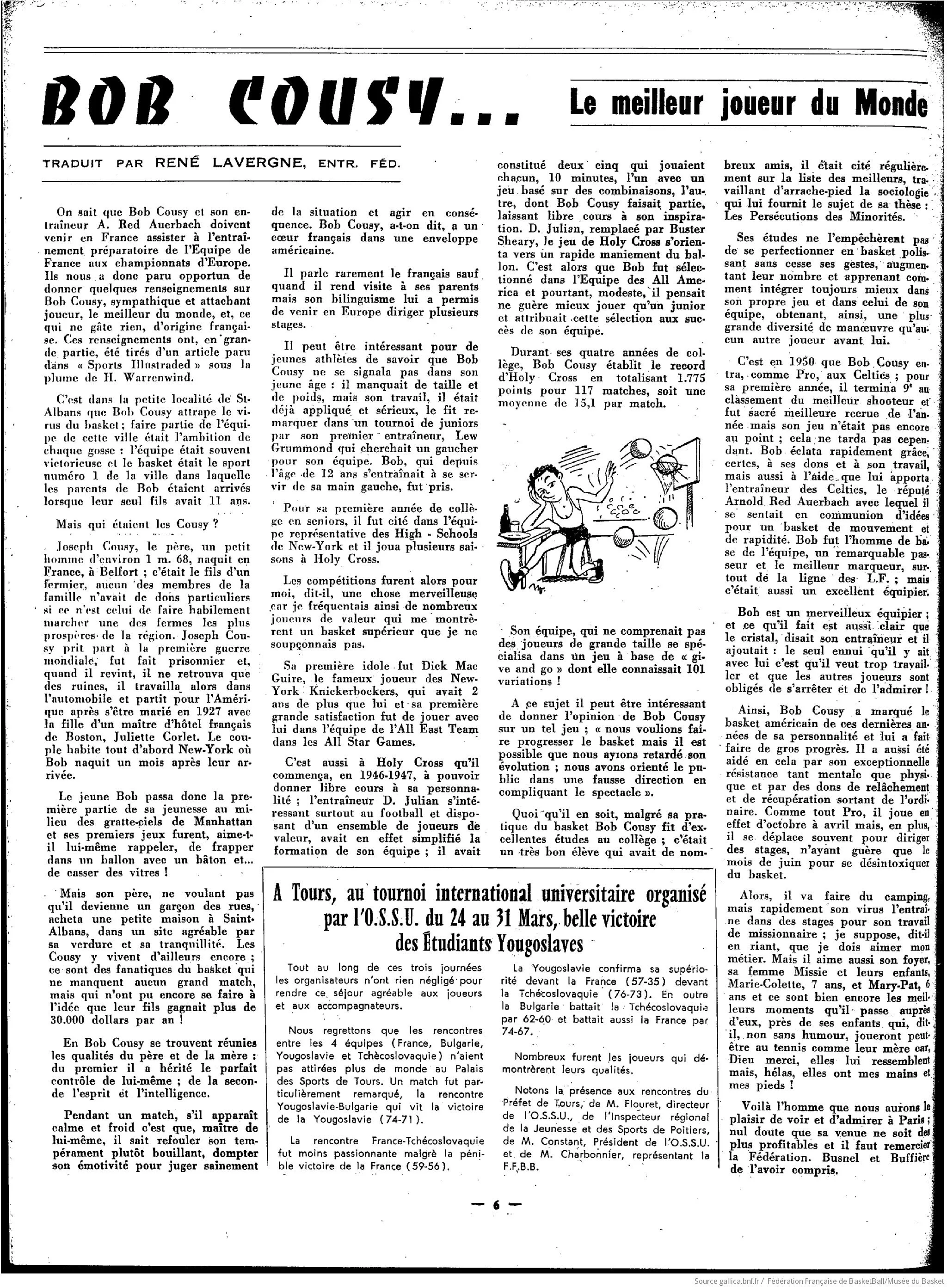
French and American basketball took different trajectories after 1893 but continued to serve as mutual points of exchange after the two world wars. A 1959 training camp for the French national team with two Boston Celtics legends proved pivotal. That May, coach Red Auerbach and his star point guard Bob Cousy visited Paris to share how they played the game. The francophone Cousy, son of French immigrants, counseled his counterparts to play less technically and more naturally with an emphasis on greater scoring. Weeks later, those same men earned a third-place finish at the European Basketball Championship (EuroBasket), Les Bleus’ last international podium finish until 2000.
Photo (below) from Basket-Ball, May 1959. Available via Gallica/BNF https://gallica.bnf.fr/ark:/12148/bpt6k5813610k/f8.item#
But it was another iconic Boston Celtic who perhaps had a more impactful effect on French basketball.
Bill Russell, an 11-time NBA champion and Civil Rights activist, rewrote the script for how to play defense. While Russell fought to win his last title with Boston in 1969, a young French player some 3,500 miles away avidly watched Celtics game tape so that she could recreate his moves and tactics. That’s how Élisabeth Riffiod learned her idol’s defensive style and techniques, which she deployed in a glittering career for France, helping Les Bleues to the 1970 EuroBasket silver, and her club, Clermont Université Club, one of the most dominant European sides of the late 1960s through early 1980s. Riffiod finally met Russell decades later when her son, Boris Diaw, entered the NBA.
American influences helped strengthen basketball in France, even as French influences have begun to do so in the United States, first in the NCAA (1984), then the NBA and WNBA (1997). This heritage traces its throughline to France’s best ambassador to North America, NBA Defensive Player of the Year Victor Wembanyama, the next face of the league.
It isn’t just basketball where the Franco-American sports story shines.
Overtime the transatlantic relationship has been built through tennis, rugby, golf, gymnastics, judo, and more—including football.
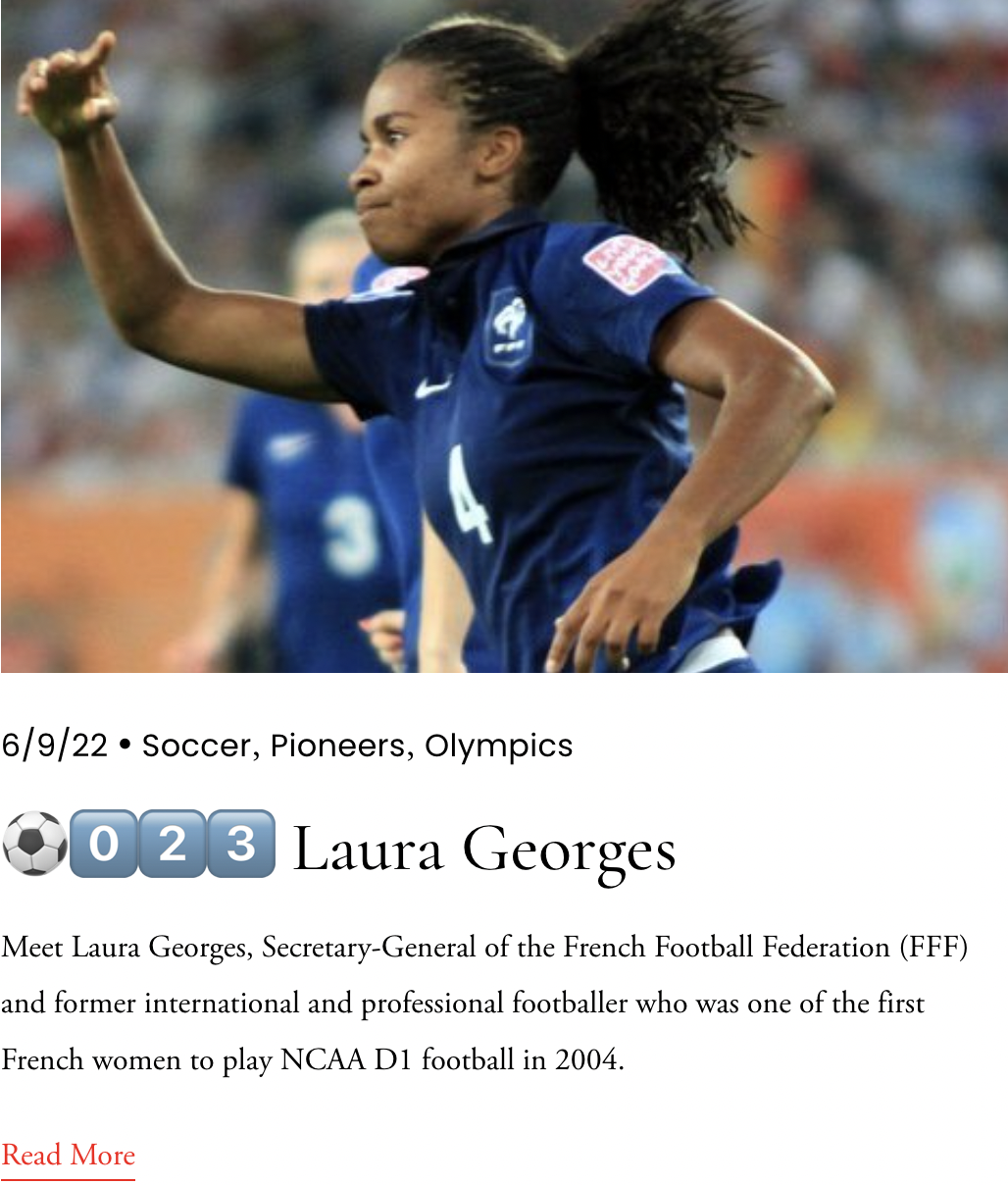
While Les Bleus discover Boston this summer, it’s former international Laura Georges whose Bay State experience is noteworthy. Long before Georges served seven years as French Football Federation Secretary-General, she was a student-athlete at Boston College. The BC Hall of Famer taught her teammates about France, its football, and its hero Zinedine Zidane. In turn, she learned how to never give up, to be more confident, and to be present in the moment while working to develop better mental toughness. These qualities she brought back to the national team. During her time en bleu, France regularly became one of the world’s top ten ranked teams and garnered a historic fourth-place finish at FIFA World Cup 2011.
Sports are an accessible space where French and Americans can engage and exchange about their countries and cultures. This historic, albeit at times hidden, pillar of the Franco-American relationship fosters sporting techniques, savoir faire, and leadership development that strengthens each country’s sports scene. The growth of the transatlantic sports economy and business sectors provides timely opportunities to write new chapters in this larger story.
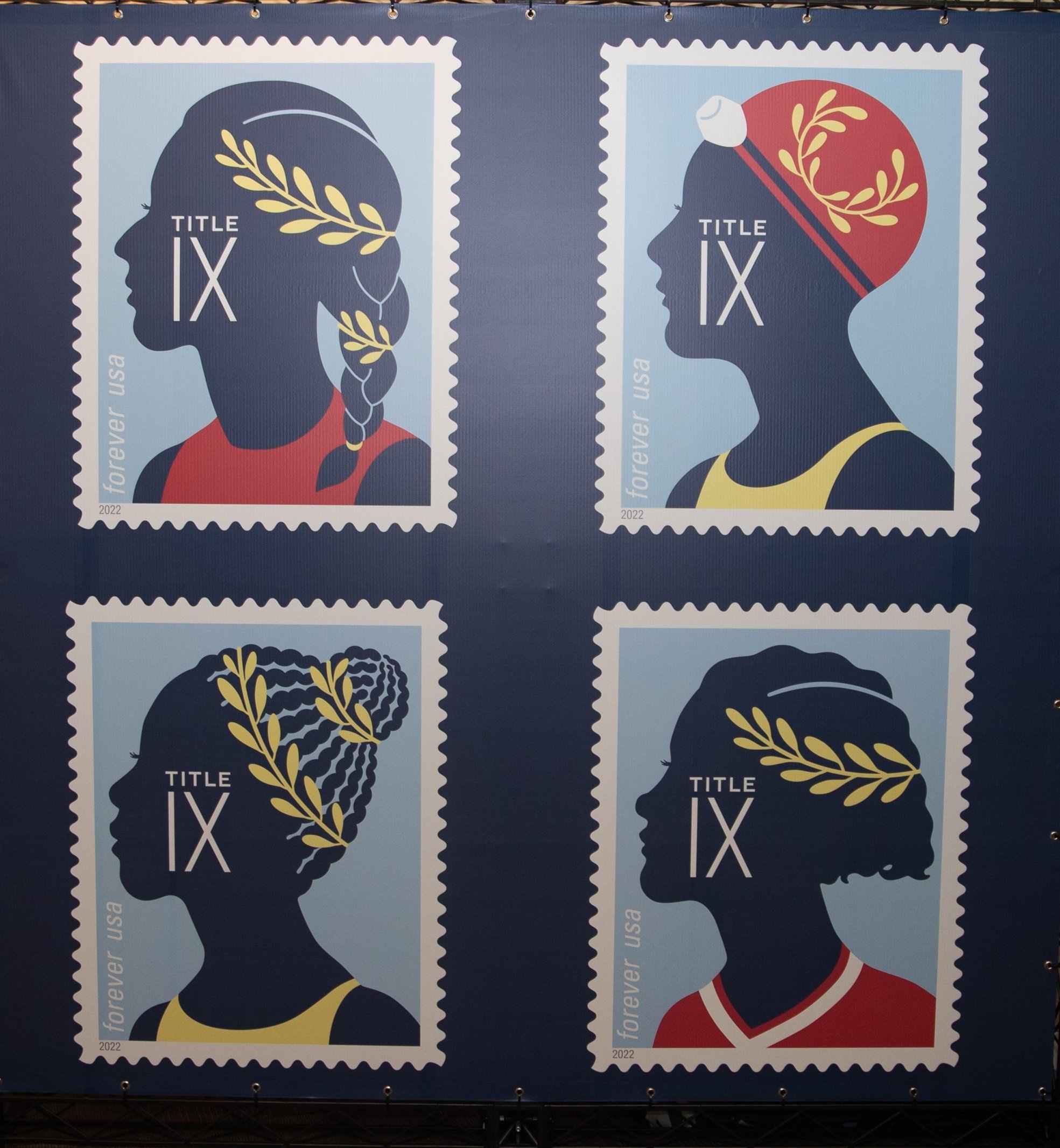
Title IX at 50: Beyond the United States
Today’s celebration of Title IX’s 50th anniversary focuses on how this legislation has benefitted generations around the United States–but it’s also had an impact on France, too.
Today’s celebration of Title IX’s 50th anniversary focuses on how this legislation has benefitted generations around the United States–but it’s also had an impact on France, too.
Title IX of the 1972 Education Act stipulates that “no person in the United States shall, on the basis of sex, be excluded from participation in, be denied the benefits of, or be subjected to discrimination under any educational program or activity receiving Federal financial assistance.” Those 37 words have had multidimensional impacts, including providing greater opportunities for women to pursue education while playing sports. Not just American women, but French women, too.
Many of the Voices in the growing FranceAndUS archive were able to pursue their sports passions thanks to Title IX’s educational and sports benefits, which enabled them to be student-athletes in U.S. schools while pursuing academic studies. And some of them were inspired by or received recognition from legendary U.S. coaches, like University of Tennessee basketball’s Pat Summitt.
“American college really reinforced my technically, basketball, and vision of the game.”
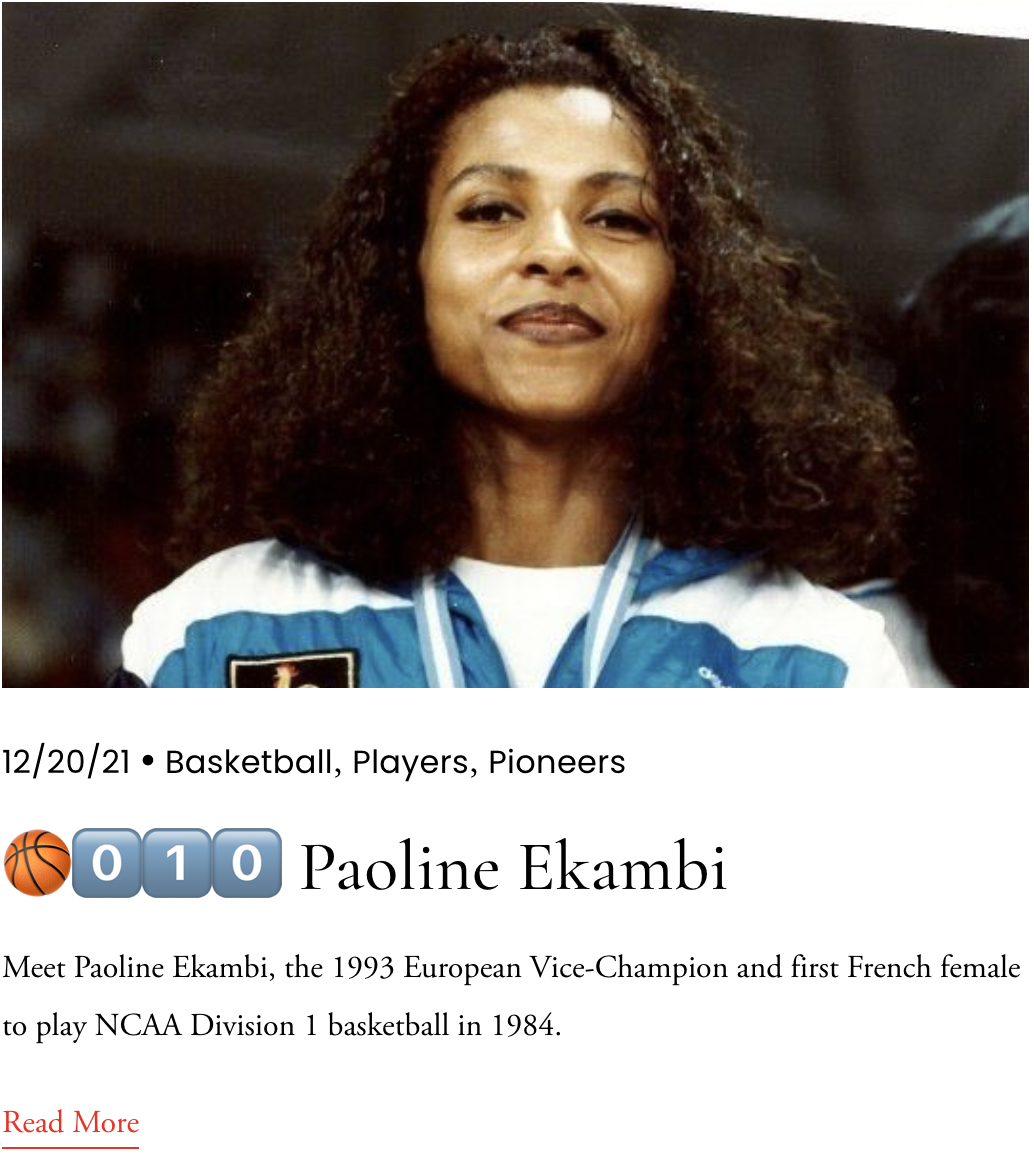
For example, the first French woman to play Division 1 basketball, Paoline Ekambi, in 1984 did so through a bourse at Marist College in Poughkeepsie, New York. As she noted, her motivation to excel at Marist, where she was part of the Big Five, was her desire to demonstrate that French women knew basketball and could play it well. Ekambi attributed her two seasons with the Red Foxes with helping her to become a better player, teammate, and on-court leader. These attributes she passed along to her younger Les Bleues teammates, some of whom had their own American dreams.
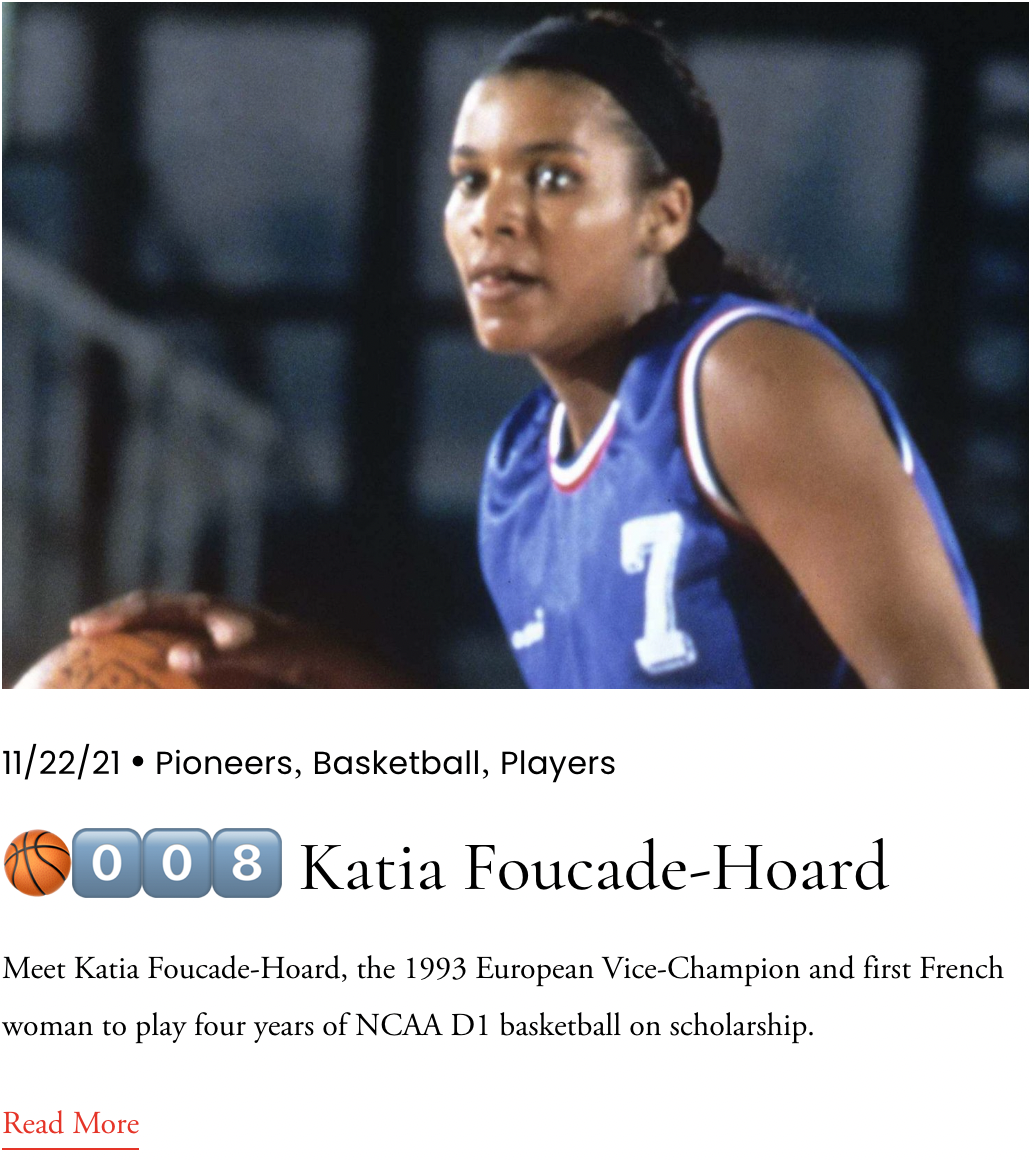
Some of this first wave included Katia Foucade-Hoard, the three-time University of Washington Huskies co-captain whose standout career (1991-95) remains inscribed in the school’s record book.
“The thing I learned in the States is that anyone is as good as anyone else, even if on paper it shows that the other team is better. It doesn’t matter when the ball goes up in the air. It’s only at the end of the game that we’ll see who’s the best.”
Foucade-Hoard’s U.S. experience helped inform her service with the national team. At the June 1993 EuroBasket tournament, France fought their way to a silver medal, its first podium finish since 1970. Ekambi was part of that team, as was Yannick Souvré, who played at Fresno State for the 1989-90 season.
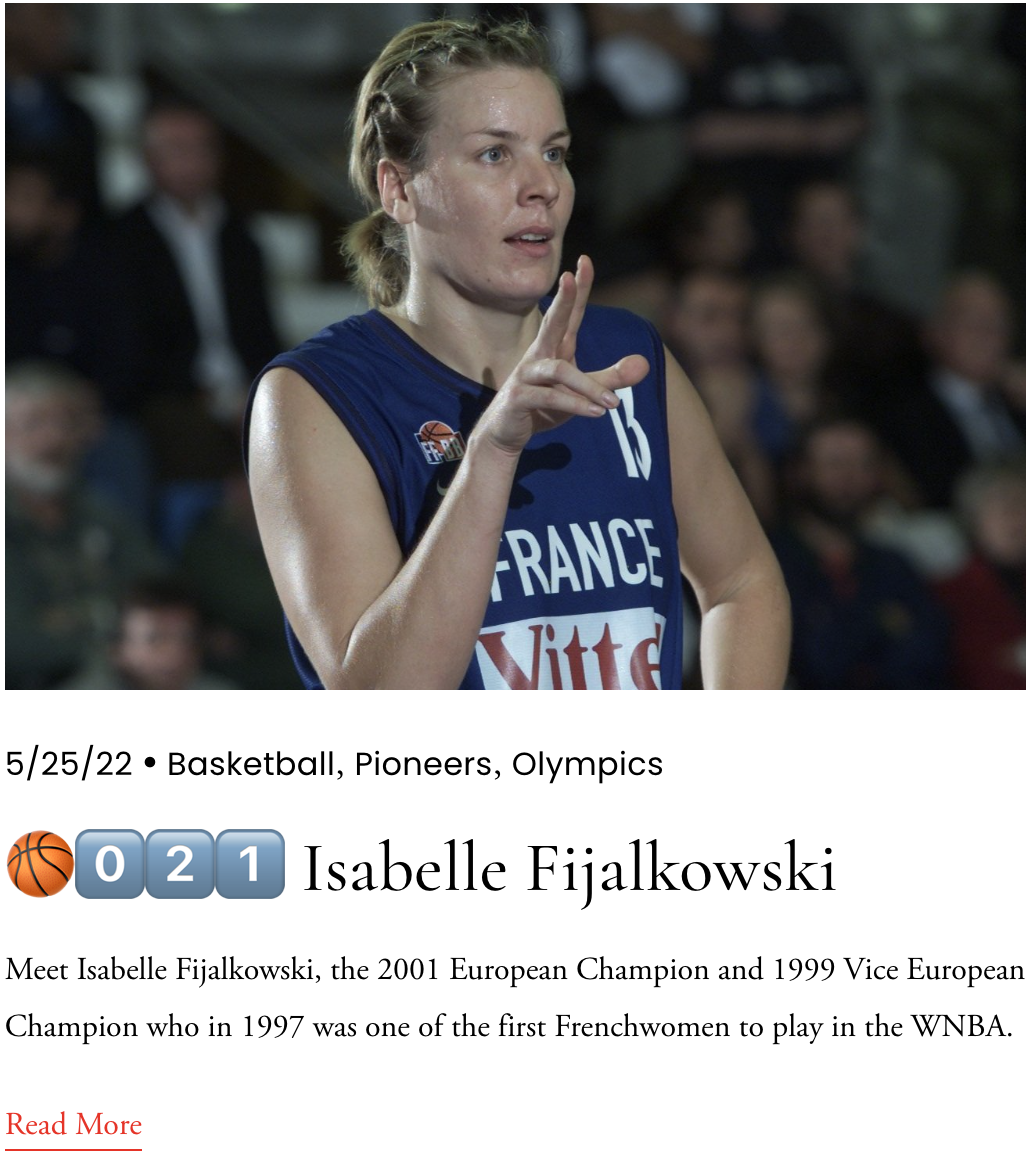
Also on that team? Isabelle Fijalkowski, who spun her 1994-95 season with the University of Colorado Buffalos–one of the program’s best–into a springboard to the WNBA in 1997. At the March 1995 NCAA women’s basketball tournament, the team marched through the brackets but fell to Georgia, 79-82, in the Elite Eight, despite Fijalkowski’s valiant efforts (35 points, 9 rebounds, 4 assists).
It’s important to note in this story the two-way knowledge, technical, and cultural exchange facilitated by this Title IX sports diplomacy. As Fijalkowski pointed out, her previous experience in France helped her Colorado teammates.
“They saw that I could help them as a team because there weren’t any other players with my profile…Thus they were delighted.” Isabelle Fijalkowski.
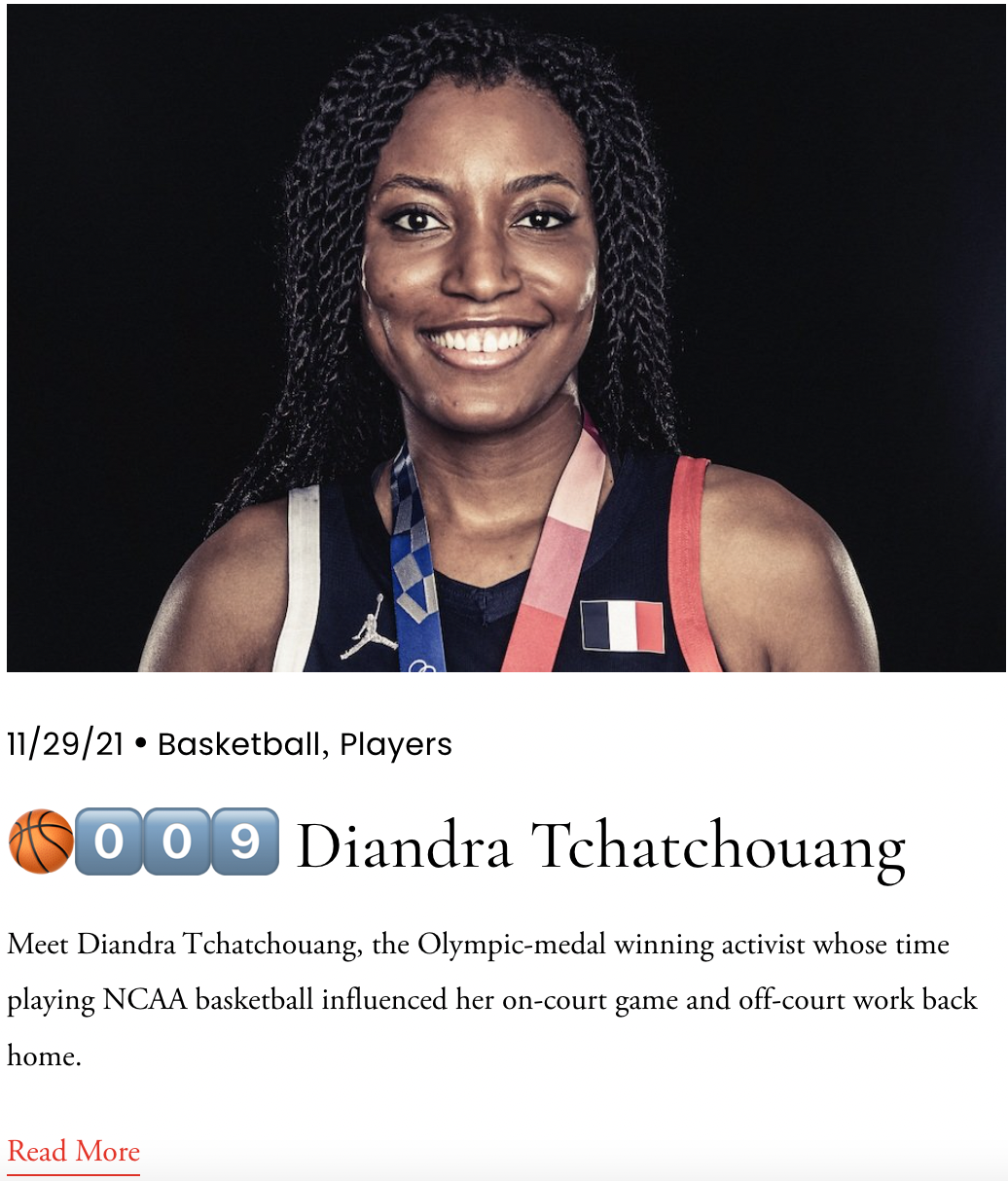
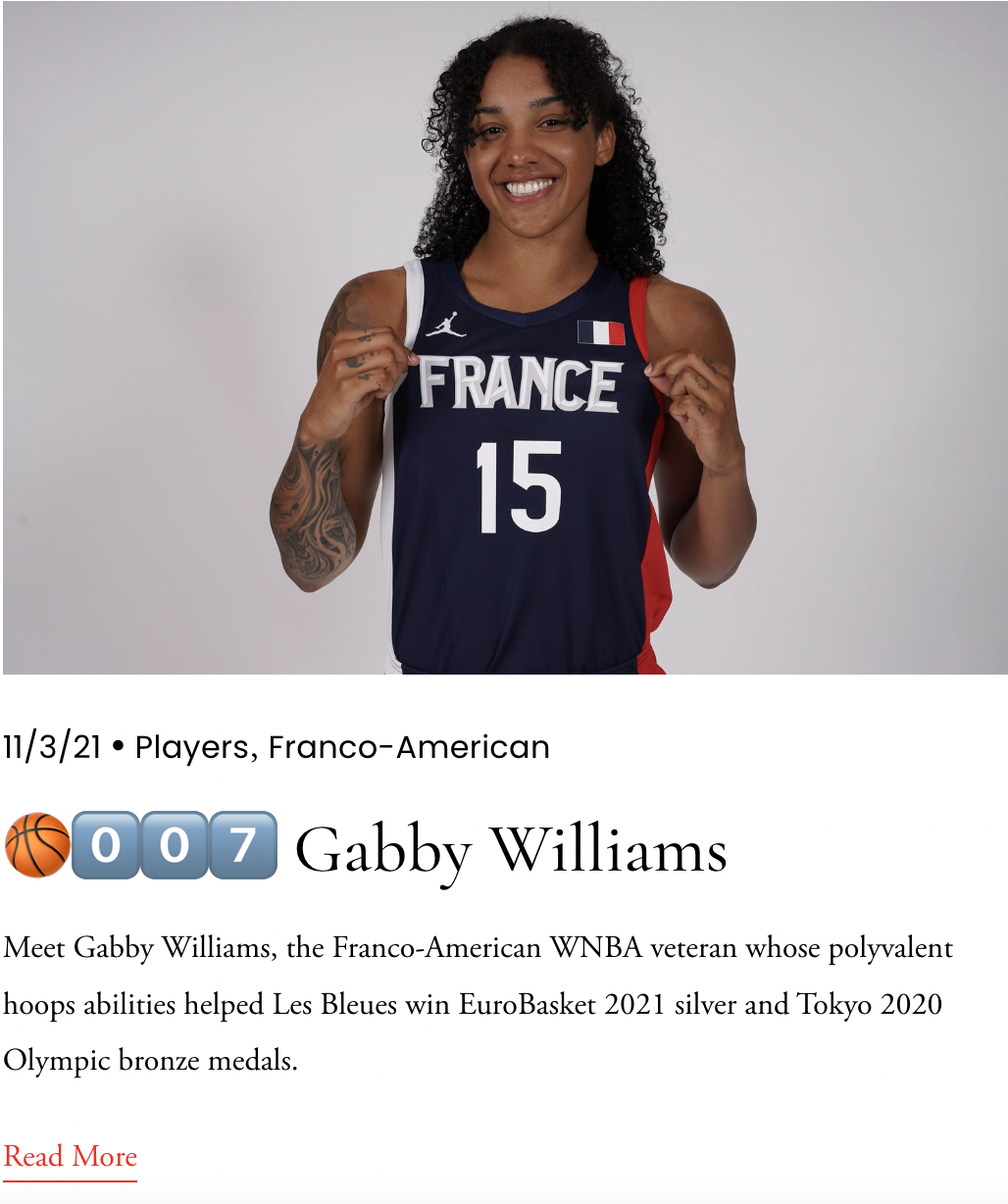
The basketball story has many subsequent generational iterations, including Diandra Tchatchoung (University of Maryland) and Gabby Williams (University of Connecticut) whose transatlantic experiences have helped inform Les Bleues’ successes of the 2010s. And helped fuel the overall growing yet friendly France-USA basketball rivalry.
But it isn’t just at the D1 or national team levels that these Title IX sports diplomacy exchanges are ongoing; it’s there for French women playing D2 and D3 basketball, as well as for U.S. women who compete in the Ligue Féminine de Basketball (LFB), like Penn State alumna Nikki Greene (Angers) and UT alumna and WNBA’s Cassidie Burdick (ASVEL).
There’s a growing intergenerational story of Title IX-inflected FranceAndUS sports diplomacy in soccer. When Title IX was passed in 1972, women’s soccer in France was in the midst of a slow-simmering revival; although one of the early foundational nations in the discipline–the French and English national team captains’ friendly cheek kiss at a 1920 match was the soccer world’s first viral moment–the game fell out of favor and was eventually banned under the Vichy regime. In the 1960s, there was a slow return of organized women’s clubs, and in 1970, the French Football Federation (FFF) recognized the women’s game. But those who played were long marked with numerous stereotypes, which even the current generation active on pitches still fight.
“What I learned in the U.S. and my career in Boston was the team-building effect, how you play not just for yourself but how you’re part of a team with a spirit.”
That’s why it wasn’t until the early 2000s that the first French women came to the United States to play NCAA soccer. FFF Secretary-General Laura Georges was one of the first when she began a Hall of Fame career at Boston College in 2004.
Of note, since Olympique Lyonnais president Jean-Michel Aulas launched and invested in a women’s team in 2004, the team’s rise and decade-long dominance of French and European competition has provided avenues for U.S. players, products of Title IX’s provisions for middle school, high school, and collegiate sports opportunities, to play professionally in France. OL alumna include Alex Morgan, Hope Solo, and Megan Rapinoe, while current squad member Catarina Macario had a standout career at Stanford University before journeying across the Atlantic Ocean.
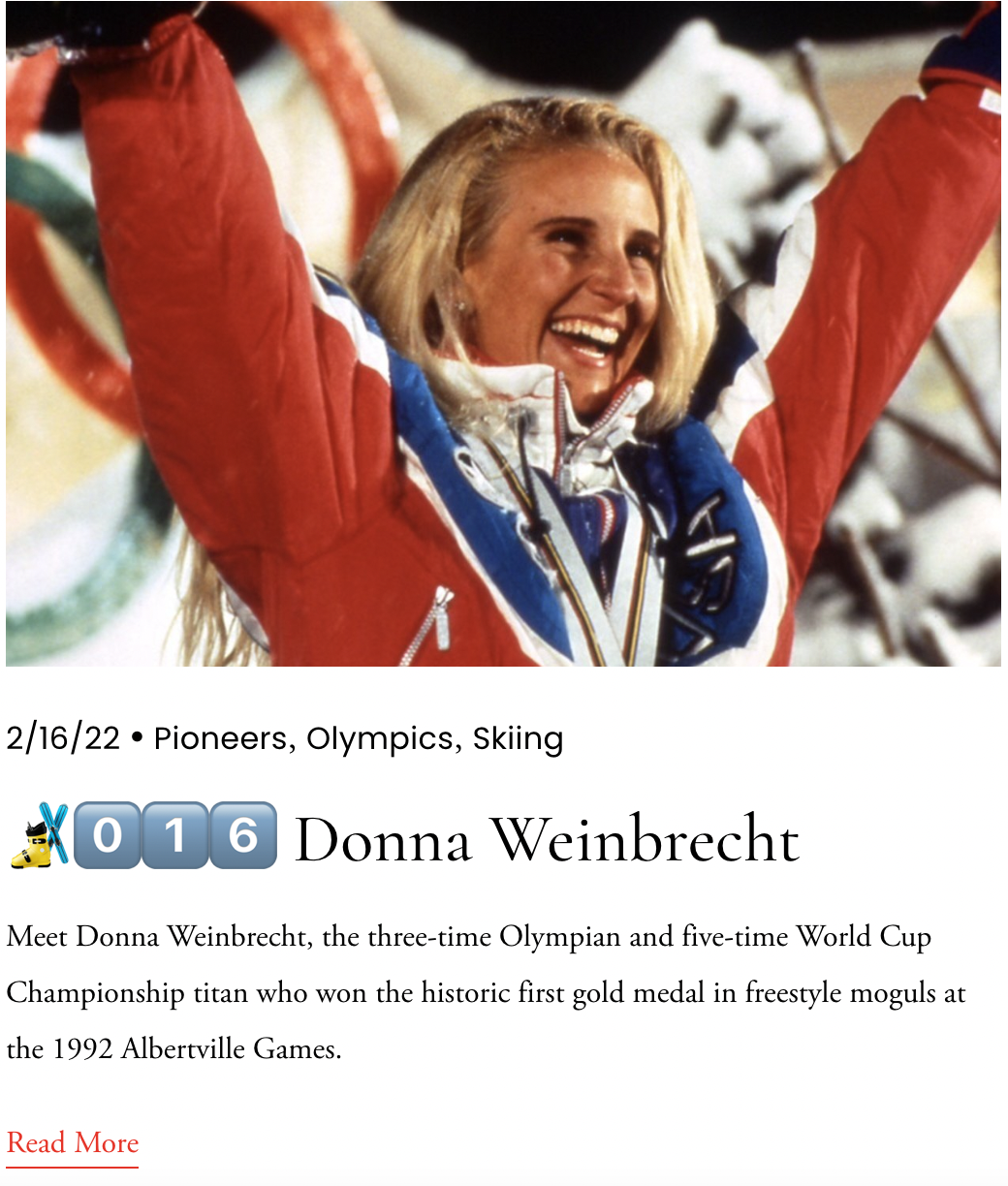
There are similar intergenerational FranceAndUS stories for other disciplines, such as alpine skiing. Take the Voice of U.S. National Ski Hall of Famer Donna Weinbrecht, the 1992 Olympic gold medalist who was one of the first generations to come of age under the new law. In 1981, she founded her high school’s first ski team, which enabled her to begin training more earnestly and laid the groundwork for her eventual Olympic and World Cup successes.
These storylines are just the start, and more will be added to and highlighted by the archives in the years ahead.