Football: A France x US Story
The FIFA World Cup 2026 placed the sporting relationship between the United States, one of the event’s co-hosts, and France firmly in the spotlight. But the ties are more than 100-years strong.
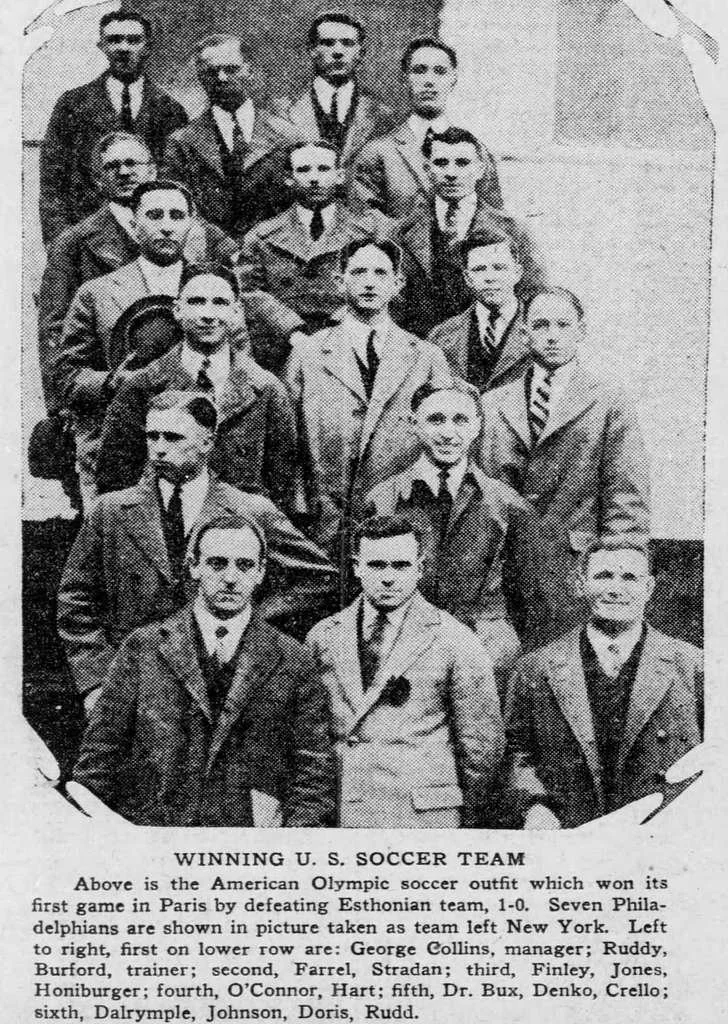
The 1924 U.S. Olympic Football Team
The Franco-American football story includes several chapters over the last century. Some of the earliest U.S. footballers to play in France were the young men who competed for the United States at the 1924 Paris Olympics. Haiti-born Joe Gaetjens, who played for the U.S. men’s national team at FIFA World Cup 1950 (where he scored “the most famous goal in American soccer history”) played with top flight clubs Racing Club de Paris and Olympique Alès in the early 1950s. And more American men began to play in Ligue 1 after 2010.
The transatlantic flow westward within the men’s game looks a little different. First, it was French students who played during their U.S. university years, such as former New York Red Bulls Soccer Club General Manager Jerome de Bontin, who played for Amherst College’s varsity soccer team while studying economics in the late 1970s and early 1980s. Today, there are more than 400 young Frenchmen who are student-athletes within the NCAA system.
Since the 1996 establishment of Major League Soccer, it’s also been French professionals who arrive on American shores to ply their craft. Some of the biggest names in the global game came to MLS toward the end of their playing days, including Youri Djorkaeff, Thierry Henry, Hugo Lloris, Olivier Giroud, and Antoine Griezmann (who joined Orlando City in 2026). And there’s a bit of French influence within MLS itself, such as Frédéric Lipka whose portfolio is particularly focused around MLS youth development.
But it’s within women’s football where the Franco-American football ties run deepest in terms of how they have nourished each other.
Frenchwomen have played starring roles within their U.S. university teams, thanks to Title IX’s sports provisions. For example, former French international and Boston College Hall of Famer Laura Georges seized on her U.S. experience in the early 2000s to develop her off-pitch capacities and leadership, all of which she brought home as she helped elevate the game.
They’ve also played key roles within U.S. women’s professional soccer. Legend and former Les Bleus captain Marinette Pichon led the way, as the Women’s United Soccer Association (WUSA) Most Valuable Player of 2002 during her time with the Philadelphia Charge. Camille Abilly and Sonia Ponpastor both played in the short-lived Women’s Professional Soccer League (WPS) then later etched their marks within the sport’s coaching ranks.
And they keep making waves within the National Women’s Soccer League (NWSL) era. Since the league’s first season in 2013, several of France’s best talents have experienced the United States through “soccer,” including Amandine Henry and France’s greatest goalscorer Éugenie Le Sommer. More recently, Delphine Cascarino and Kenza Dali have taken over as part of the league’s “New French Wave.”
The flow goes the other way, too. In the 2000s, top French clubs OL Féminin (now OL Lyonnes) and Paris-Saint-Germain Féminin were fertile terrain for US Women’s National Team (USWNT) talent like Megan Rapinoe, Alex Morgan, and Lindsey Horan, a place where they could continue to develop and refine their game. Other American players, such as Arianna Criscione, converted their French football experience into building the business of women’s sports on- and off-pitch.
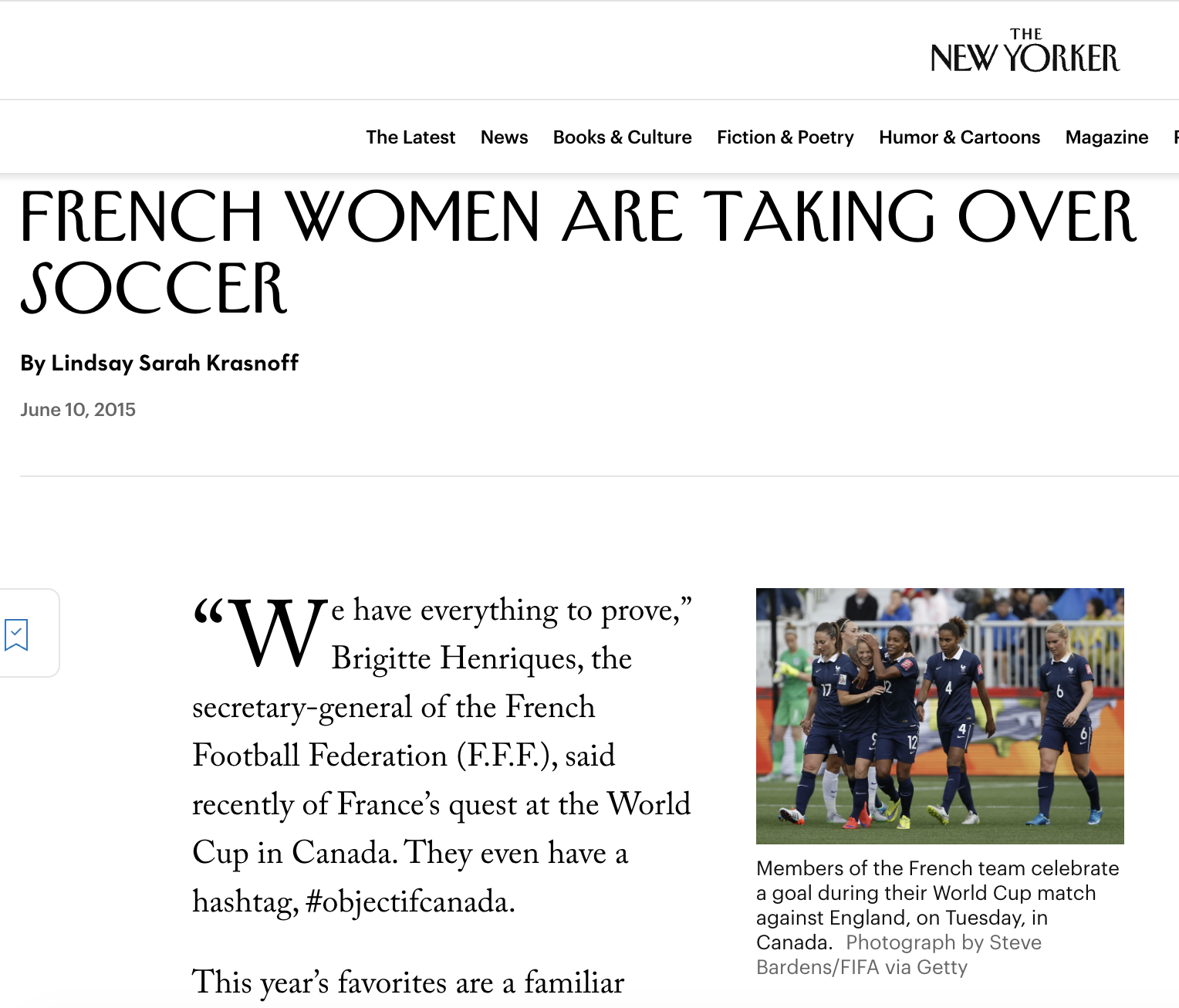
This is in part a reflection of how France was an incubator of the pro game, particularly thanks to the early investments of Louis Nicollin (Montpellier) and Jean-Michel Aulas (Lyon). As the NWSL gained greater financial investment, more French (and other foreign) players headed to North America for their careers.
Then there’s the way that U.S. businesswoman Michele Kang is breaking new ground. Owner of OL Lyonnes, as well as the Washington Spirit (NWSL) and London City Lionesses (WSL), Kang is also the chairwoman and president of Olympique Lyonnais (OL) as well as, since June 2026, its majority owner.
The Franco-American football relationship was deepened by FIFA World Cup 2019 and Paris 2024. FIFA World Cup 2026 will add yet another chapter to this story.