🥋0️⃣6️⃣4️⃣ Gévrise Émane
By Gévrise Émane
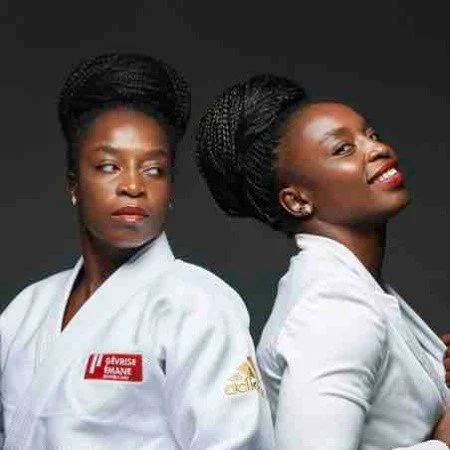
Meet Gévrise Émane, a highly decorated Olympian, World and European Champion whose judo mastery knows no bounds.
Editor’s Note: Judo has a deep history in France. Introduced during the 1930s, it gained popularity in the post-1945 era. By the 1960s French judokas gained European recognition; they participated at the sport’s first Olympic competition at Tokyo 1964 and won their first Olympic medals at Munich 1972. Since then, generations of Frenchwomen and men have battled for supremacy on the tatami while inspiring kids through their practice.
Judokas like Gévrise. During her athletic career she did it all. The three-time World Champion and Olympian also won four Grand Slams, three Grand Prix, and an Olympic Bronze medal among many other accolades. As a coach and now Vice President of International Relations for the French Judo Federation (FFJ), Gévrise is helping to build the next chapters of the sport en route to LA 2028.
This is Gévrise’s first-hand story of her U.S. sports diplomacy experiences.
Gévrise’s Story
I discovered judo at the age of 12 in middle school. We had various physical education and sports activities that included Ultimate Frisbee 🥏, volleyball 🏐, dance, track and field...and judo. My physical education teacher was also a judo instructor—Mr. Jacky Bicheux.
The 2013 Grand Prix Miami -63kg semi-final between Gévrise and Miki Tanaka (JPN)
The first time I went to the United States for judo was in 2013, for the Miami Grand Prix. It was a wonderful experience, both in terms of sport—even though I didn't face any American opponents that day—and life in general.
I discovered parts of Miami, such as Little Havana and Miami Beach, and enjoyed a massive non-alcoholic cocktail. The atmosphere was different from New York, which I visited in 2009. Miami Beach has this fitness culture, replete with joggers, so the smiles you get when you say, “I am a high-level judo athlete,” are impressive (even if Americans aren't as familiar with judo; wrestling is much more popular in the United States, especially within the university system).
Americans have such respect for sport, for athletes, sport’s values, and the soft skills it builds! It’s truly gratifying to be regarded as a whole person.
The Sports Diplomacy Connection
When I was elected [as Vice President of FFJ] in 2020 as part of the federation’s new team, I immediately wanted to establish a long-term project connecting France and the United States. It was a good time to think strategically about such an initiative: just after the Tokyo Games but ahead of the Games in Paris 2024 and LA 2028.
I wanted to tell the story of the passing of the baton, or the torch, between Paris and LA. So, I developed the “En route pour les Jeux” (On the Road to the Games) project, using judo as the baton, the bridge between nations.
It is a message of peace, but also of transmission: passing on values and exchanging expertise.
Although the number of registered judo practitioners in the United States is lower than in France, which has nearly 600,000 as of Summer 2026, U.S. world-renowned champions have always made a mark as world champions, medalists, and Olympians like Jimmy Pedro, Kayla Harrison, Ronda Rousey, Travis Stevens.
“En route pour les Jeux” was created around the Olympic and Paralympic Week, and aimed at young people aged 6 to 18. French schools in the United States served as anchor points, and U.S. clubs were also invited to participate. Furthermore, the project was implemented in collaboration with the US Judo Federation.
Judo served as a vehicle for discovering a different culture and new people, a way to progress together. Jita Kyoei (mutual welfare and benefit).
As a result of implementing this project, I was able to better understand the U.S. school and university system. I also developed a better grasp of the business aspects of sports.
All these elements are useful to me today in my ongoing relationships with contacts in the United States and other countries. Even though international relations can be quite subtle within sports, you need to analyze the context of the person you are dealing with in order to provide an appropriate response or proposal that doesn't cause offense.
I do not consider myself an ambassador. Yet, it seems to me that the initiatives developed in collaboration with ten partner countries demonstrate my ability to work in diverse, multicultural, and high-stakes environments.
Knowing how to navigate different currents, defuse tensions, and bring about “win-win” collaborations represents, in my view, the skillset a diplomat possesses.
Mapping the Connection
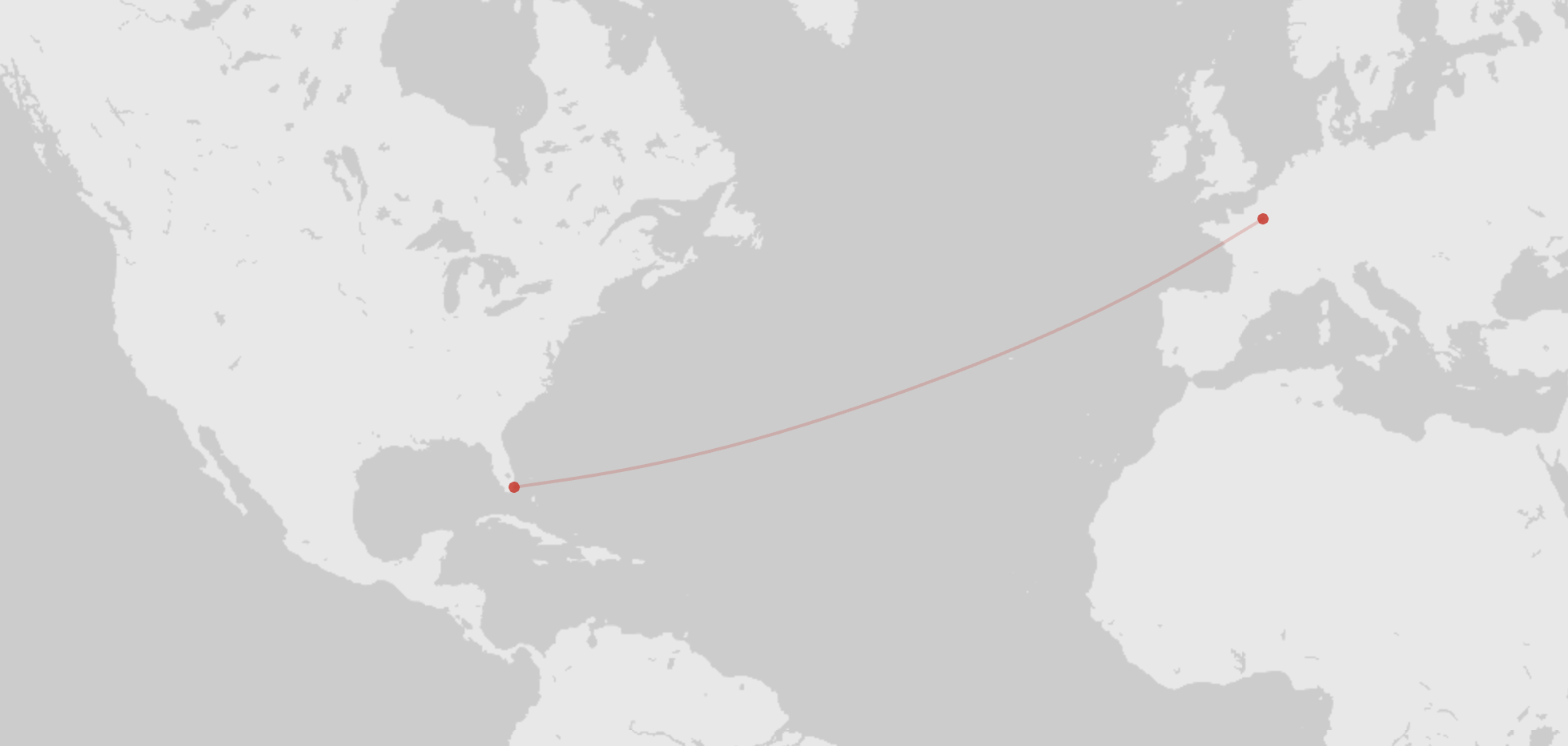
From Paris, France to Miami, Florida for her first U.S. trip
Learn More
[E] Hans van Essen, “Gévrise Émane: The champion who mastered three generations of World Judo,” JudoInside, July 27, 2026
[E] “Gévrise Émane,” Olympics.com
How to Cite This Entry
Émane, Gévrise. “Voices: Gévrise Émane,” FranceAndUS, https://www.franceussports.com/voices/064-gvrise-mane. (date of consultation).